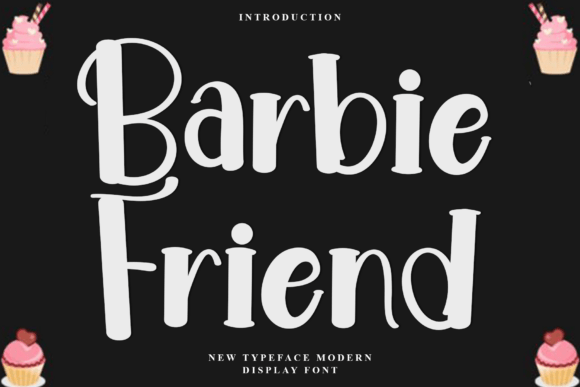
Why Barbie Friend Font Is Reshaping Authentic Brand Storytelling
In an era where digital saturation often leads to visual fatigue, the creative industry is witnessing a significant pivot toward authenticity and tactile warmth. Professionals across marketing, design, and entrepreneurship are increasingly seeking typographic solutions that break away from the sterile perfection of geometric sans-serifs. Enter Barbie Friend, a typeface that has captured the attention of creators not merely for its aesthetic appeal, but for its ability to communicate genuine human connection. This casual and creative font exudes warmth and friendliness, serving as a strategic tool for brands looking to foster approachability in a high-tech landscape.
The relevance of Barbie Friend extends beyond its playful appearance. It represents a broader shift in consumer psychology where audiences crave personalization and handcrafted elements in commercial communications. As we navigate an economy driven by social commerce and direct-to-consumer relationships, typography has evolved from a functional vessel for text into a primary driver of emotional engagement. Understanding why this specific typeface resonates requires examining the intersection of design trends, technological accessibility, and the changing expectations of modern consumers.
The Shift Toward Emotional Typography in Digital Markets
For decades, corporate identity was defined by rigidity, structure, and uniformity. However, current market analysis suggests a departure from these traditional norms. Consumers, particularly within Gen Z and Millennial demographics, associate overly polished branding with inauthenticity. They respond more favorably to visual languages that mimic human interaction. Barbie Friend fits precisely into this niche by offering round, playful strokes that create a relaxed and approachable feel. This is not accidental; it is a direct response to the demand for "imperfect" design that signals transparency and relatability.
This trend is evident across multiple sectors. In the wellness and lifestyle industries, for example, the font’s charming, hand-drawn aesthetic adds a fun and unique touch to any design, softening the clinical nature of health products. Similarly, in the education and childcare sectors, the typeface bridges the gap between professional credibility and nurturing care. For entrepreneurs and freelancers, utilizing such a distinct voice allows for immediate differentiation in crowded marketplaces. The font acts as a visual shorthand for friendliness, reducing the cognitive load required for a customer to trust a new brand.
Bridging Professionalism and Playfulness
A common misconception among business leaders is that playful typography equates to unprofessionalism. On the contrary, the strategic use of fonts like Barbie Friend demonstrates a sophisticated understanding of tone. It is perfect for personal projects, invitations, and social media graphics because it aligns with the native language of these platforms. Social media algorithms currently favor content that feels organic rather than overtly promotional. By integrating a typeface that mimics handwriting or marker art, marketers can increase dwell time and engagement rates by making branded content feel like peer-to-peer communication.
Furthermore, this balance is crucial for internal communications and employer branding. Companies striving to cultivate inclusive, creative workplace cultures are adopting softer visual identities in their newsletters, onboarding materials, and office signage. The warmth inherent in Barbie Friend helps dismantle hierarchical barriers visually, supporting HR initiatives focused on psychological safety and employee well-being. In this context, the font is less about decoration and more about cultural signaling.
Technical Accessibility and Modern Creative Workflows
The resurgence of hand-lettered aesthetics coincides with the democratization of design tools. We are no longer in an era where custom typography is reserved for agencies with dedicated type foundries. Today’s creators operate in agile environments, often switching between professional suites and accessible web-based platforms. A critical factor in the adoption of Barbie Friend is its technical versatility. This font is equipped with standard PUA Encoded glyphs, which are designed in various application engines such as Adobe Photoshop, Corel, Adobe Illustrator, Canva, and many others.
This technical specification is vital for workflow efficiency. PUA (Private Use Area) encoding ensures that special characters, ligatures, and alternates remain accessible even in software that does not natively support OpenType features. For a social media manager creating quick assets in Canva or a freelance illustrator working in Procreate, this compatibility removes friction. It allows for the seamless integration of high-quality typographic details without requiring advanced technical knowledge or expensive plugin ecosystems. This alignment with modern, hybrid workflows explains why the font has gained traction among diverse user groups ranging from seasoned art directors to small business owners managing their own marketing.
Empowering Non-Designers Through Intuitive Assets
The rise of the creator economy has expanded the definition of who creates visual content. With millions of micro-entrepreneurs launching businesses via Etsy, Shopify, and Instagram, there is a massive demand for assets that offer professional polish without a steep learning curve. Barbie Friend serves as an equalizer in this space. Its intuitive forms allow non-designers to achieve a bespoke look that previously required hiring a lettering artist. This empowerment drives the font’s popularity, as it enables solopreneurs to maintain brand consistency across packaging, digital ads, and email signatures without exhausting limited budgets.
Moreover, the availability of such versatile assets supports the rapid iteration cycles demanded by modern marketing. Trends move quickly, and brands must be able to adapt their visual messaging in real-time. Having a reliable, multi-platform font that conveys instant warmth allows teams to produce timely, relevant content that still feels thoughtful and curated. This agility is a competitive advantage in an attention economy where speed and quality must coexist.
Practical Applications Across Industries
To fully appreciate the utility of Barbie Friend, one must look at its application in specific business contexts. The font’s characteristics make it uniquely suited for several high-growth areas:
- E-Commerce Packaging: Unboxing experiences are a critical touchpoint for online retailers. Using this typeface on thank-you cards, tissue paper, or box sleeves transforms a transactional moment into an emotional memory, encouraging user-generated content and repeat purchases.
- Hospitality and Events: For wedding planners, boutique hotels, and cafes, the font’s relaxed elegance communicates hospitality before a guest even arrives. Menus, welcome signs, and digital itineraries benefit from the legible yet stylized forms that suggest care and attention to detail.
- Children’s Products and Education: Beyond mere cuteness, the rounded strokes are psychologically associated with safety and gentleness. This makes the font ideal for book covers, educational apps, and toy packaging where establishing trust with parents is paramount.
- Personal Branding for Creatives: Photographers, coaches, and consultants use the font to inject personality into their portfolios. It signals that while they are professionals, they are also accessible humans, helping to convert inquiries into client relationships.
These examples illustrate that the font is not a monolithic solution but a flexible component of broader design systems. Successful implementation often involves pairing Barbie Friend with cleaner, more neutral body copy to ensure readability while allowing the display text to carry the emotional weight. This contrast enhances both hierarchy and impact, ensuring that the warmth of the headline does not compromise the clarity of the message.
Future-Proofing Design with Human-Centric Assets
As artificial intelligence and automation continue to reshape content creation, the value of distinctly human artifacts will likely increase. We are approaching a horizon where AI-generated imagery and text become ubiquitous. In this future landscape, imperfections, hand-drawn textures, and idiosyncratic typography will serve as markers of authenticity. Investing in assets like Barbie Friend is a forward-looking strategy for brands that wish to retain a human signature amidst technological advancement.
The continued relevance of this typeface also speaks to the enduring power of nostalgia and comfort. In uncertain economic or social climates, design that offers reassurance and familiarity performs exceptionally well. The casual nature of the font taps into collective memories of childhood creativity and friendship, providing a subconscious anchor for consumers. This emotional resonance is difficult to replicate with algorithmic design, securing the font's place in the toolkit of empathetic marketers and designers.
Ultimately, the decision to incorporate Barbie Friend into a creative repertoire should be driven by intent. It is most effective when used to solve specific communication challenges related to tone, trust, and accessibility. Whether streamlining workflows through PUA encoding compatibility or softening a brand’s edge to attract a younger demographic, the font offers tangible benefits that transcend aesthetics. For professionals, creators, and entrepreneurs, it represents a convergence of style, substance, and technical pragmatism, proving that in the modern design landscape, being friendly is a serious business advantage.